AudorithmSep 29, 2026
Booking Season Is Open: A Corporate Planner's Audio Checklist for Holiday Events
December dates get claimed fast, and great event audio is never an afterthought. A practical planning checklist for corporate holiday parties — timelines, hybrid decisions, and the production details that separate a smooth night from a feedback-form disaster.
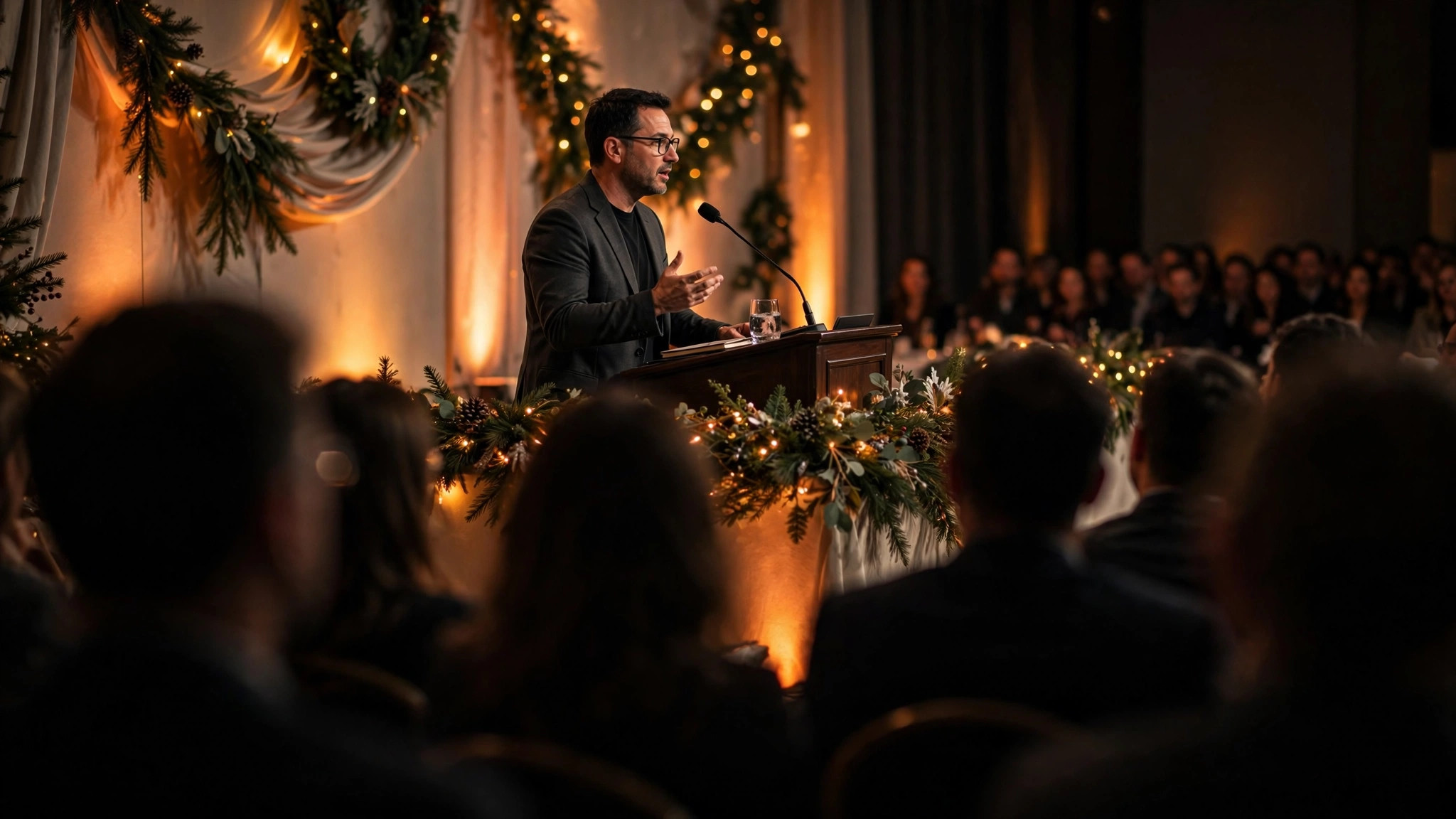
It's late September, which means one thing for corporate event planners: booking season is officially open. The companies that lock their production partners in October throw relaxed, polished holiday parties. The ones that start calling in December get whoever's left — and their audio shows it.
Holiday deadlines are fixed in a way nothing else in event planning is. As one production guide notes, a custom holiday project moves through specifications, quotes, proofs, and production on a schedule that only gets less flexible as the season approaches — so the earlier you start, the more options you keep. ([Media Card Creations via LinkedIn](https://www.linkedin.com/pulse/warm-holiday-greetings-from-your-business-audio-video-kelli-fusaro-9n92e))
Here's the audio-first checklist I'd hand any planner right now.
## 1. Lock your production partner 8–12 weeks out
December is peak season for every credible AV crew in town. The best teams book first, and "best" here doesn't mean most expensive — it means the crew that has worked your venue before, knows its power layout, and answers the phone when something hums at 6 PM on show day.
When you reach out, bring: your date (plus a backup), venue, expected headcount, program shape, and whether anything streams. A good production partner will ask about load-in windows and ceiling height before they quote. If they don't ask, keep looking.
## 2. Decide the program's shape — shorter is winning
The trend in corporate holiday entertainment is unmistakable: shorter run times, higher impact. Most successful events now run 90–120 minutes total, built around two concentrated hits — a 10–15 minute opener to grab attention and a 25–30 minute feature — with long speeches trimmed or cut. ([The Grable Group's planner guide](https://www.thegrablegroup.com/holiday-event-planning/corporate-christmas-party-entertainment-ideas/))
This matters for audio because a tight program is a technical program: walk-up music, stingers, mic handoffs, and transitions all need to be cued, not improvised. Share your run-of-show with your audio team early enough that they can build it, not just react to it.
## 3. Make the hybrid call now, not in November
If any part of your audience is remote — livestreamed awards, virtual toasts, distributed teams dialing in — that decision changes the entire production plan: camera blocking, streaming encoders, a dedicated audio mix for the stream (the room mix will sound terrible online), and an emcee who addresses both audiences. ([CorpAV](https://www.corpav.net/post/planning-the-modern-holiday-party-2026-trends-for-corporate-celebrations))
The stream should be designed as a companion to the event, not an afterthought bolted on the week before. Planners who decide in October get a clean production. Planners who decide in December get a laptop on a tripod.
## 4. Let the room dictate the rig
A hotel ballroom, a company atrium, and an outdoor terrace are three completely different audio problems. Reverberant glass atriums eat speech intelligibility. Outdoor spaces lose low end to the sky and fight ambient noise. Ballrooms are forgiving until you fill them with 400 people absorbing sound.
Ask for a site survey — or at minimum, send your audio partner the venue's specs and photos. And if you're considering an LED wall as part of the stage design (increasingly popular for holiday themes), decide early: screen dimensions affect content design, rigging, power requirements, and sightlines, and late changes get expensive. ([EventsAV](https://eventsav.co/audio-visual-event-trends-2026/))
## 5. If there's a theme, the audio should know about it
Immersive themes — winter lodge, retro neon night, city winter — are driving engagement at holiday parties, but they only land when lighting, visuals, and audio tell the same story. That means music transitions matched to the theme, soundscapes for entrances, and audio cues that move the program between segments. ([CorpAV](https://www.corpav.net/post/planning-the-modern-holiday-party-2026-trends-for-corporate-celebrations))
Brief your DJ or audio team on the theme the same way you'd brief the decorator. "Play holiday music" and "we're doing a 1980s neon night — synth-heavy, high energy, no sleigh bells until the awards segment" produce very different nights.
## 6. Sweat the speeches
The least glamorous audio at any corporate event is also the most failure-prone: executive remarks and awards. Plan for it:
- One wireless handheld per speaker, plus a podium mic as backup — never share a single mic across a lineup.
- Walk-up music and award stingers cued by name, in order.
- A real rehearsal, even 20 minutes, so levels are set before the room fills. An executive's first words to the company this year should not be "is this thing on?"
## 7. Plan for the content after the party
Holiday parties have become employer-branding assets — highlight reels, culture clips, recruiting content. That only works if it's captured properly: decent lighting, intentional camera angles, and clean audio feeds. Mention it to your production team in October and it's a line item. Mention it in December and it's a scramble.
## The bottom line
None of this is complicated. It's just early. The planners having great holiday parties this December are the ones having production conversations right now — locking dates, deciding on hybrid, briefing themes, and letting audio be part of the plan instead of the thing everyone notices only when it goes wrong.
If you're planning a corporate holiday event in Orlando and want to talk through what your room needs, that's exactly what we do. But whoever you call: call them in October.
Originally published on Audorithm by Tim Velzy.