Empower PlayDec 12, 2025
How We Built an AI-Powered Content Hub to Manage 7 Websites from One Dashboard
Building a Multi-Site Content Hub: How We Unified Blog Management Across 7 Platforms Managing content across multiple websites is one of the biggest challenges facing modern digital agencies. When you're running several platforms—each with its own audience, tone, and publishing schedule—keeping everything synchronized becomes a logistical nightmare. That's exactly the problem we solved by building our centralized content hub.
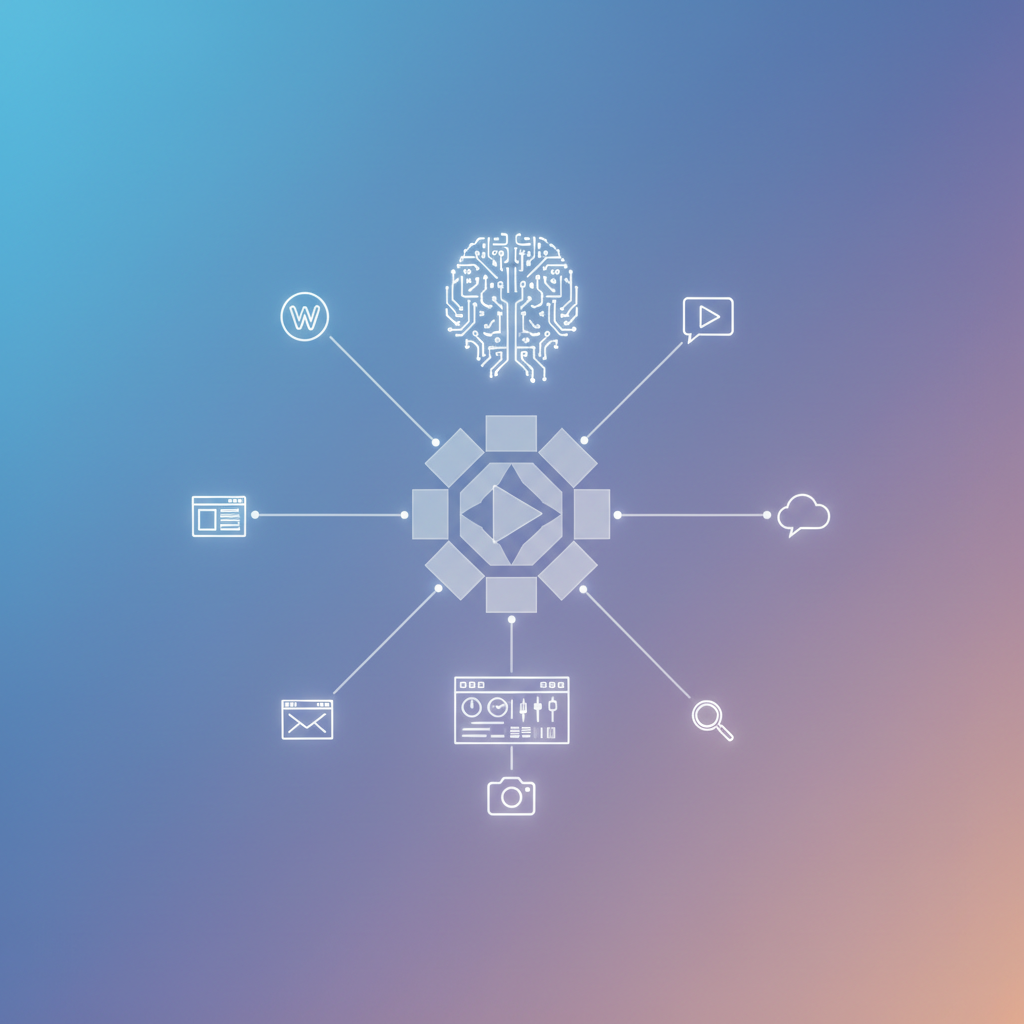
Building a Multi-Site Content Hub: How We Unified Blog Management Across 7 Platforms Managing content across multiple websites is one of the biggest challenges facing modern digital agencies. When you're running several platforms—each with its own audience, tone, and publishing schedule—keeping everything synchronized becomes a logistical nightmare. That's exactly the problem we solved by building our centralized content hub.
The Challenge: Content Chaos Across Multiple Platforms At Empower Play Studio, we manage seven distinct platforms: MusicEPS, GigStack.space, Audorithm, Detroit House Collective, Le Funk Tears, UpInspired, and our main EmpowerPlayStudios site. Each serves a different audience with unique content needs:
MusicEPS focuses on electronic music releases and artist features GigStack targets gig workers with productivity tips and industry insights Audorithm speaks to corporate event planners seeking DJ services Detroit House Collective celebrates house music culture Le Funk Tears caters to French house enthusiasts UpInspired showcases Native American art and handcrafted products Before our content hub, we were duplicating effort—writing similar posts multiple times, manually copying content between platforms, and struggling to maintain consistent publishing schedules.
The Solution: A Centralized Hub-and-Spoke Architecture We built a sophisticated content hub that serves as the central nervous system for all our blogs. Here's how it works:
Channel Management System Each sub-site is registered as a "channel" in our hub. Channels store critical configuration:
Site URL and Supabase connection details for API communication API keys for secure authenticated requests Audience descriptions defining who reads that site Content tone settings (professional, casual, technical, etc.) Custom AI adaptation prompts for generating channel-specific variants Content Delivery API Sub-sites fetch their blog content through our blog-content Edge Function. A simple API call retrieves all scheduled and published posts for that channel:
const { data } = await supabase.functions.invoke('blog-content', { body: { channel: 'musiceps' } }); The API returns posts with their channel-specific variants—customized titles, excerpts, and content tailored to each audience.
Bi-Directional Sync with Approval Workflow Here's where it gets powerful: sub-sites can also push content back to the hub. When an author creates a post locally on MusicEPS, it automatically syncs to our central hub and appears in an approval queue.
This enables distributed authorship with centralized editorial control:
Local author writes post on sub-site Post syncs to hub with sync_status: 'pending_approval' Editorial team reviews in the approval queue Approved posts become available for distribution to other channels Rejected posts are sent back with feedback AI-Powered Content Adaptation One of our most powerful features is AI-driven content adaptation. Write once, publish everywhere—with each version tailored to its specific audience.
How It Works When you create a blog post in the hub, you can assign it to multiple channels. For each channel, clicking "AI Adapt" generates a variant that:
Rewrites the title for that audience Adjusts the excerpt to highlight relevant aspects Adapts the full content's tone and terminology Maintains the core message while speaking each audience's language Example: One Release, Three Voices Consider a new music release announcement:
Master Post (Hub):
"Announcing 'Midnight Frequencies' - A New Electronic Journey"
MusicEPS Variant (Music Enthusiasts):
"Track Premiere: 'Midnight Frequencies' Drops with Deep House Vibes and Progressive Builds"
Audorithm Variant (Corporate Clients):
"New Release Perfect for Upscale Events: 'Midnight Frequencies' Brings Sophisticated Electronic Ambiance"
Le Funk Tears Variant (French House Fans):
"French House Meets Progressive: 'Midnight Frequencies' Channels Classic Filtered Disco Energy"
Same content, three distinct voices—all generated in seconds.
Smart Scheduling & Automation Content Calendar Our visual calendar shows scheduled posts across all channels. Drag and drop to reschedule, see gaps in coverage, and plan your content strategy weeks in advance.
Automated Content Generation We built an intelligent automation system that monitors content gaps:
Content Gap Checker runs daily, analyzing each channel's posting history When a channel falls below its minimum posts-per-week threshold, alerts trigger Auto-Generate Content can create AI-written posts based on trending topics Posts enter review queue for human approval before publishing Scheduled Publisher A cron job runs every 15 minutes checking for posts scheduled for publication. When it's time, posts automatically:
Publish to the hub Sync to assigned sub-sites Update status across all channels Enhanced Blog Management Interface Managing hundreds of posts across seven channels requires powerful tools. Our admin interface includes:
Advanced Search & Filtering Full-text search across titles, excerpts, categories, and source sites Channel filter to view posts assigned to specific sites Status filter (Published, Draft, All) Media filter (With Image, With Video, No Media) Column Sorting Click any column header to sort:
Title (A-Z, Z-A) Category Status (Published/Draft) Created Date (Newest/Oldest) Sync Status (Local/Synced/Pending) Pagination Handle large post libraries with configurable pagination (10, 25, or 50 posts per page) with full navigation controls.
Tabbed Organization Quick access to:
All Posts - Complete library Pending Approval - Synced posts awaiting review Synced - Posts from sub-sites Local - Hub-originated content Adapted - Posts with AI variants Calendar - Visual scheduling view Automation - Auto-generation settings Technical Architecture Database Schema Our Supabase backend includes specialized tables:
channels - Site configurations and API credentials blog_posts - Master post content with sync metadata post_channels - Channel assignments with variant content content_schedule_settings - Per-channel automation rules content_reminders - Gap tracking and alerts auto_generated_posts - AI generation audit trail Edge Functions Nine specialized serverless functions power the hub:
Function Purpose blog-content Deliver posts to sub-sites blog-sync Receive posts from sub-sites adapt-blog-variant AI content adaptation generate-blog-post AI content creation generate-blog-image AI featured image generation scheduled-publisher Timed post publication content-gap-checker Monitoring automation auto-generate-content Automated post creation fetch-trending-topics Topic research for AI Security API key authentication for all channel communications Row Level Security (RLS) policies protecting content Audit trails tracking all content changes IP logging for sync requests Sub-Site Integration Getting a sub-site connected takes minutes. We even built an "Integration Prompt" generator that creates complete setup instructions for each channel:
Add custom hooks (useBlogFromHub, useBlogPostFromHub) Update Blog.tsx to fetch from hub API Update BlogPost.tsx for individual post display Configure local-to-hub sync for bi-directional flow Each sub-site retains its own design and user experience while the hub handles content orchestration.
Results & Impact Since launching our content hub:
70% reduction in content creation time Consistent publishing across all 7 platforms Zero missed schedules thanks to automation Better audience targeting through AI adaptation Streamlined editorial workflow with approval queues What's Next We're continuing to enhance the hub with:
Analytics dashboards showing cross-platform performance A/B testing for AI-adapted variants Social media scheduling integration Enhanced AI with GPT-5 and Gemini 2.5 models Conclusion Building a multi-site content hub transformed how we manage our digital presence. What once required a team manually copying content now runs automatically with AI-powered personalization. Whether you're managing two sites or twenty, centralized content management with intelligent distribution is the future of multi-platform publishing.
Built with React, TypeScript, Supabase, and Lovable AI Gateway. Interested in a similar solution for your platforms? Contact us to discuss your content management needs.
Originally published on Empower Play by Tim Velzy.